Meet the researcher!
Posted by Glenn Callihan on December 13, 2019 11:35 AM EST
Our Cancer Control team has been working on a new series called "meet the researcher." They have created one pagers featuring researchers located in our region. Check this one out on Dr. Laura Shankman from Virginia.
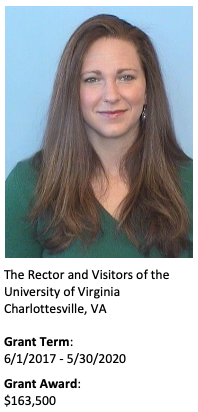
Meet the Researcher
Laura Shankman, PhD
"Funding from the American Cancer Society has allowed me to pursue research on the side effects of cancer therapy in the small intestine. My father is currently suffering from many of the clinical sequela of irradiation and chemotherapy that I study. His condition really inspires me to try and find ways to improve the lives of cancer survivors in remission, but reminded daily of the toxic treatments that they had to undergo to get there."
Attenuating Chemotherapy Immune Response Through Improved Cell Clearance
Due to the fact that cancer cells divide more quickly than most cells in the body, the vast majority of therapeutics strategically target pathways that help cells divide. Unfortunately, this strategy also targets cells in non-diseased tissue that grow quickly as a part of their normal function. One of most susceptible areas to the off-target cell death associated with cancer therapy is the gastrointestinal (GI) tract. Over half of cancer patients treated with therapies that combine a chemotherapeutic agent with irradiation develop a painful, and potentially life-threatening, GI side effect known as mucositis that can lead to life-long intestinal tract dysfunction (such as irritable bowel syndrome). Not only is mucositis painful for the patient, it can force clinicians to halt therapy, allowing cancer cells time to re- establish themselves.
A subset of the healthy intestinal epithelial cells that die from off target effects of cancer therapy will undergo a process known as programed cell death, or apoptosis. If they are cleared quickly by cells called phagocytes, there is negligible inflammation. However, if not cleared in a timely manner, the apoptotic cells can become necrotic and release inflammatory signals known as cytokines that will initiate an immune response. Dr.Shankman’s lab specializes in studying the molecular biology behind apoptosis and phagocytosis, and she has published multiple high impact papers describing this process in the last decade. She proposes to increase the ability of local phagocytes to clear apoptotic cells in order to alleviate the inflammatory/immune response after chemotherapy treatment. In order to achieve this goal, she will utilize organoids (a miniaturized ‘organ''that can be created in tissue culture from mouse or human biopsy samples) to test the effect of different cancer therapies on organoid health. She will further evaluate them for the ability of BAI1 (an apoptotic cell recognition protein) to promote clearance of dying cells and reduce inflammation. Previous studies in the lab show that increased BAI1 in intestinal epithelial cells can reduce inflammation in colitis, and preliminary experiments in mouse organoids suggest that increased BAI1 will be beneficial to intestinal health after treatment with chemotherapeutics.
To expand these findings and to test the “translatability” of her findings in the mouse organoids to the patient, Dr. Shankman will compare her results to preparations of human organoids (made from small biopsy samples). Taken together, modulation of phagocytosis to treat mucositis is a novel therapeutic strategy, which along with recently emerging methods for using organoids derived from patient biopsies as a method of screening drugs to develop individualized treatment plans has the potential to vastly improve treatment options for cancer patients.